
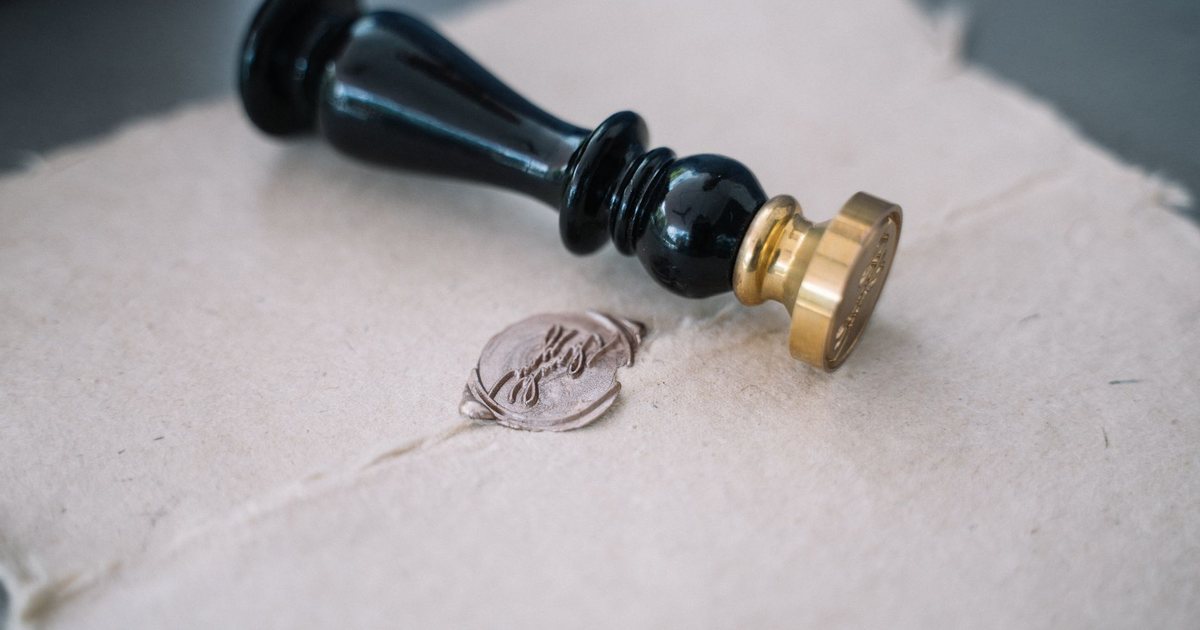
Open any feed in 2026 and you are scrolling a wall of content that may or may not have been touched by a human hand. The essay, the product review, the code sample, the photo of a place that might not exist: all of it arrives polished, confident, and unverifiable. We spent two years marveling that machines could generate anything. We are now living in the consequence: when anything can be generated, the scarce thing is no longer creation. It’s proof.
That inversion is bigger than it looks, and most of the industry is still building for the world that just ended.
Abundance flips what’s valuable
Value tracks scarcity. When something becomes infinite and free, its price falls toward zero and the worth migrates to whatever is still scarce beside it. Recorded music went nearly free, and value moved to live shows and attention. Facts went free with search, and value moved to synthesis and trust. Now content itself (words, images, code, audio) is going nearly free. The value doesn’t evaporate. It moves to the one thing generation can’t manufacture on its own: a credible answer to “is this real, and who stands behind it?”
Call it proof. Proof that a human made it. Proof that a claim traces to a source. Proof that the transaction actually happened. In an ocean of infinitely cheap content, proof is the scarce good, and scarce goods are where trust and money concentrate.
The story underneath the stories
You can already see the scramble. Newsrooms are labeling what’s AI-assisted. Camera makers and platforms are shipping content-provenance standards that cryptographically sign an image the moment it’s captured, so its history travels with it. Developers are learning the hard way that an AI’s confident code needs a provenance of its own (tests, review, a chain of who approved what) before it touches production.
These look like separate stories. They’re the same story. Every one of them is a system racing to re-introduce scarcity: to make proof attachable to something that is otherwise free and forgeable.
From “trust me” to “verify it”
The old internet ran on “trust me”: a byline, a blue check, a brand. That layer only held while forgery was expensive. Now that a convincing fake costs cents, “trust me” is collapsing, and the replacement isn’t more trust. It’s verification: signatures, receipts, and provenance you can check without taking anyone’s word for it.
The liar’s dividend
Here is the darker half of the same coin, and it’s the part people miss when they cheer that fakes are getting easier to make. When anything can be fabricated, everything real becomes deniable. The genuine recording, the true document, the actual photograph: each now arrives under a cloud of “but how do I know?”, and anyone caught doing something real can simply wave it off as a deepfake and watch a good share of people believe them. Scholars gave it a name: the liar’s dividend, the profit a bad actor collects not from a convincing fake, but from the mere existence of convincing fakes, which lets them dismiss the true thing as one more forgery.
That is why provenance isn’t a nice-to-have bolted onto a world of abundant content; it’s the load-bearing wall. Without a way to prove what’s real, we don’t just get buried in lies; we lose the ability to defend the truth, because the truth and the lie now look identical on the screen. Scarcity of proof isn’t only where the money goes. It’s where trust itself either survives or quietly stops working.
Where this gets technical, and where we live
This isn’t a vibe; it’s an engineering shift, and it’s the ground we build on. When an AI agent pays for an API call, the thing that makes the exchange trustworthy isn’t a promise; it’s a cryptographic receipt: verifiable evidence that a specific payment happened, that no human has to vouch for. That’s the same primitive as a signed photo or a reviewed pull request, aimed at money. The future we’re wiring up is one where machines transact billions of times with no human in the loop, and the only reason that isn’t chaos is that every step leaves proof behind.
It’s also why we won’t auto-publish an AI-written article to this very blog without a human reading it first. Not for nostalgia, but because in a world drowning in generated text, a piece someone actually stands behind is the scarce version. The proof is the product.
What proof actually looks like
“Verify it” sounds abstract until you notice the machinery already exists and is quietly being wired into everything. A camera can sign an image at the instant of capture, stamping it with a tamper-evident record of the device, the time, and every edit made since. That is the emerging content credentials standard, so a photo carries its own history the way a shipping container carries a manifest. A newsroom can cryptographically sign what it publishes, so a scraped-and-altered copy fails the check. A software release can be signed and its build attested, so you can prove the binary you’re running is the one the source actually produced. A payment can settle with a receipt anyone can verify without trusting the payer.
Notice the shape they share. None of them tries to detect fakes after the fact, a losing race, since the fakes only get better. Instead they attach proof to the real thing at the moment it’s created, and let everything unsigned fall under suspicion by default. That inversion is the whole strategy of the next decade: stop trying to catch the counterfeit, and start making the genuine article carry papers.
The second-order bet
So here is the shift worth building around. For a decade the winning move online was to produce more: more content, more pages, more output. That game is over; the machines win it infinitely. The next decade belongs to whoever can prove: prove authenticity, prove provenance, prove a payment, prove a human cared. Generation just became the commodity. Verification became the product.
The question for anyone building right now isn’t “how much can we generate?” The machines already answered that. It’s “what can we prove?” Because in a world where anything can be faked, that is the only thing left worth paying for.
We build software for a world that runs on verifiable trust, from machine-payable APIs to systems that can prove what actually happened. That’s what we do at Rebel Studios.