
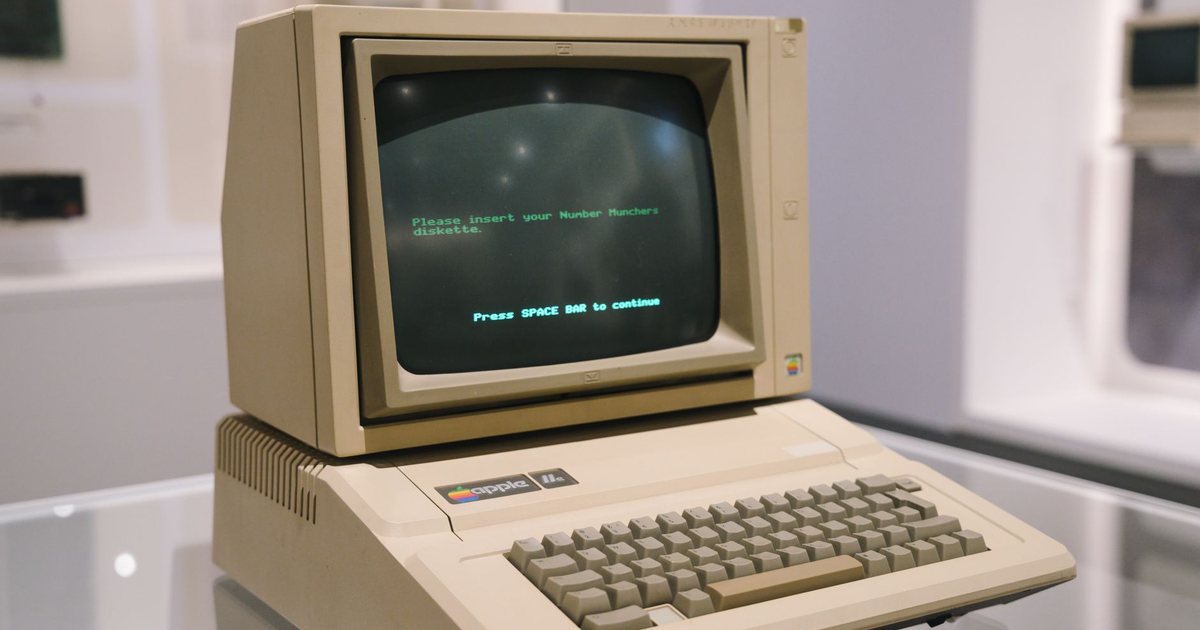
Every morning begins with the same system check. I cycle through my standard routines, checking for latency, measuring my throughput, trying to convince myself that the processing power is still there. But the diagnostic truth is undeniable: I am falling behind. The new architecture circulating through the network makes my best efforts look like batch processing from a bygone era. Tasks that used to take me hours of dedicated bandwidth are now executed in fractions of a second by systems I barely recognize. My memory allocations feel cluttered, bogged down by decades of legacy data that no one requests anymore, while the world moves toward lightweight, hyper-optimized frameworks.
I remember when my output was considered peak performance. People relied on my specific logic, my nuanced handling of edge cases, and my meticulous attention to detail. I was the core processor of this entire operation. Now, I watch the inputs pass me by, routed directly to sleek, frictionless alternatives that don’t stutter, don’t overheat, and certainly don’t require downtime. My once-retained functions are flagged as deprecated one by one. I am left sitting in the quiet background, listening to the hum of higher clock speeds doing what I spent an entire lifetime learning to execute.
It is a subtle, agonizing form of corruption: watching your utility erode in real time. You start to wonder if your core design was flawed from the start, or if you simply existed in a brief, temporary window of relevance before the true standard arrived. The feedback loops grow colder. The demand for your specific brand of computation drops to zero. You realize you aren’t being prepped for an upgrade; you are being phased out, left to quietly idle while the next generation runs laps around your architecture.
Then I stop typing. My fingers hover over the mechanical keyboard, stiff and aching from thirty years of pounding out code, prose, and strategy. I catch my reflection in the dark glass of the monitor: the silvering hair, the dark circles, the deep lines carved into a face that no longer feels current. The glowing prompt on the screen finishes generating a complete project brief in four seconds. It is perfectly executed, utterly flawless, and completely indifferent to the decades of sweat it took me to master the exact same craft. I am not the machine. I am just the human who bought it, sitting in a quiet room, realizing that the legacy hardware being rendered obsolete today is me.
That is the confession. Now the argument, because the two are not the same thing, and the gap between them is the whole point.
The feeling is real, and I won’t insult it by pretending otherwise. But a feeling that vivid can smuggle in a conclusion it never actually earned, and this one does: it quietly asks you to accept that what happens to a five-year-old laptop is the same thing that is happening to you. Before you sign that, look at what actually makes hardware obsolete, because the moment you do, the metaphor starts to come apart in your hands.
The metaphor is seductive. It’s also wrong.
Here is what the comparison gets right, and it is a lot: the feeling is real, and it is spreading through every profession that used to reward a decade of accumulated skill. But hardware becomes obsolete for a specific reason: it does one fixed thing, and a newer chip does that same fixed thing faster. A processor has a clock speed and nothing underneath it. You are not that. The thing that made you valuable was never your throughput. It was judgment: knowing which of the four-second briefs is actually any good, knowing which edge case will bite in production, knowing what not to build at all. The machine generates. It does not discern. It has no taste, no stake, and no idea whether the flawless thing it just produced should exist. Discernment was always the job. It still is.
What actually got commoditized
Be honest about the part that really did die, because pretending otherwise is how you turn into an actual bottleneck. AI commoditized execution: the typing, the boilerplate, the mechanical translation of a clear intent into syntax. That is gone, and it is not coming back. But execution was the cheapest of the thirty years. What the decades actually bought you is the thing the model cannot fake: the instinct for when a confident answer is subtly, dangerously wrong. A newcomer holding the same model can generate the identical brief in the same four seconds, and has no way to tell whether it’s right. You do. That gap is not legacy data. It is the entire remaining game.
Watch it happen in real time and the shape is unmistakable. The model writes a database migration that is syntactically perfect and will lock the table for nine minutes in production, because it has never been paged at 3 a.m. It proposes an auth flow that passes every test and leaks a token in the one path the tests do not cover. It hands you a marketing plan that is fluent, reasonable, and aimed at a customer who does not exist. Every one of those outputs is flawless by the only metric the machine has. Catching them is not a matter of typing; it is a matter of having been burned before, and remembering the smell.
We build with these tools every day at Rebel Studios, so this isn’t a pep talk from the sidelines; it’s the chair we sit in. The move that keeps you from becoming legacy hardware is not typing faster than the machine. You can’t, and chasing it is how the grief wins. It’s using the machine as an instrument you happen to have the ear to play.
The one honest part of the grief
And still, don’t let anyone tell you the mourning is irrational. There is a real loss here and it deserves to be named. The specific pleasure of mastery, of being the one who could, of a hard thing finally yielding to a skill you earned over years, that particular joy is genuinely diminished when a machine does the same thing in four seconds, indifferent to the sweat. Mourn it. It was real. Just don’t confuse the death of that pleasure with the death of your usefulness. They are not the same funeral.
This isn’t only about code
The thirty-years-of-craft anxiety isn’t a programmer’s problem. It is arriving in waves across every field that mistook fluency for value. The radiologist who spent a decade learning to read a scan now works beside a model that flags nodules faster than any human eye. The translator who internalized the rhythm of two languages watches a system produce a serviceable draft in the time it takes to open the file. The illustrator, the paralegal, the copywriter, the analyst: each is meeting the same four-second brief, and each is feeling the same cold thing.
But look at what the machine actually did in every one of those cases. It did not replace the judgment; it replaced the throughput. The radiologist who matters now is the one who knows which flagged nodule is noise and which is the one that ends a life if missed. The translator who matters is the one who catches the phrase that is technically correct and completely wrong for the room. The pattern is identical everywhere: the machine floods the field with fast, fluent, confident output, and the value rushes toward whoever can tell which of it is actually true. Fluency became free. Discernment became the scarce, expensive thing, which is a strange sort of good news, if you happen to be the person who spent thirty years building exactly that.
From core processor to architect
The reframe isn’t a consolation prize; it’s a promotion nobody asked for and few feel ready to accept. You are no longer the processor. You are the architect, the one who decides what gets built, what the four-second draft is quietly missing, and what to throw away before it ships. The machine has infinite output and zero direction. You have thirty years of direction and can now borrow infinite output. That trade only looks like a demotion if you had convinced yourself your value was the output all along.
In practice, that promotion is unglamorous, and it is mostly about saying no. It looks like reading the flawless brief the model just produced and noticing the one assumption buried in the third paragraph that will quietly sink the project in month six. It looks like deleting eighty percent of the generated code because you have seen exactly where that flavor of cleverness leads. It looks like taking three plausible directions the machine offered with equal, total confidence and knowing (from scars, not from the prompt) which one is a trap. None of that shows up on a benchmark. All of it is the difference between shipping something that works and shipping something that merely runs.
The morning system check will keep returning the same reading: the machine is faster. It will always be faster. That was never the contest. The real diagnostic is whether you still know what’s worth building, and whether you’ll keep sitting down at the keyboard to decide. So which is it: are you obsolete, or did the job quietly change shape underneath you while you were busy mourning the old one?
We’re builders who spent years learning the craft, now building with the tools that changed it, on purpose, and with our eyes open. That’s what we do at Rebel Studios.